The decision
One leak does not answer the whole question.
A leak identifies a problem. It does not establish the cause or the extent of the damage. An inspection helps you compare an isolated repair with work across a larger part of the roof.
A focused scope
Roof repair
A repair addresses a defined problem while much of the existing roof stays in place.
- Worth a closer look when
- The problem appears in one area and the surrounding materials remain serviceable.
- Ask about
- The cause, the material match, and the limits of the proposed repair.
A broader scope
Roof replacement
A replacement gives the contractor a wider scope to address the existing roof system.
- Worth a closer look when
- Wear or repeated problems affect several parts of the roof.
- Ask about
- Removal, new materials, concealed conditions, and the complete project plan.
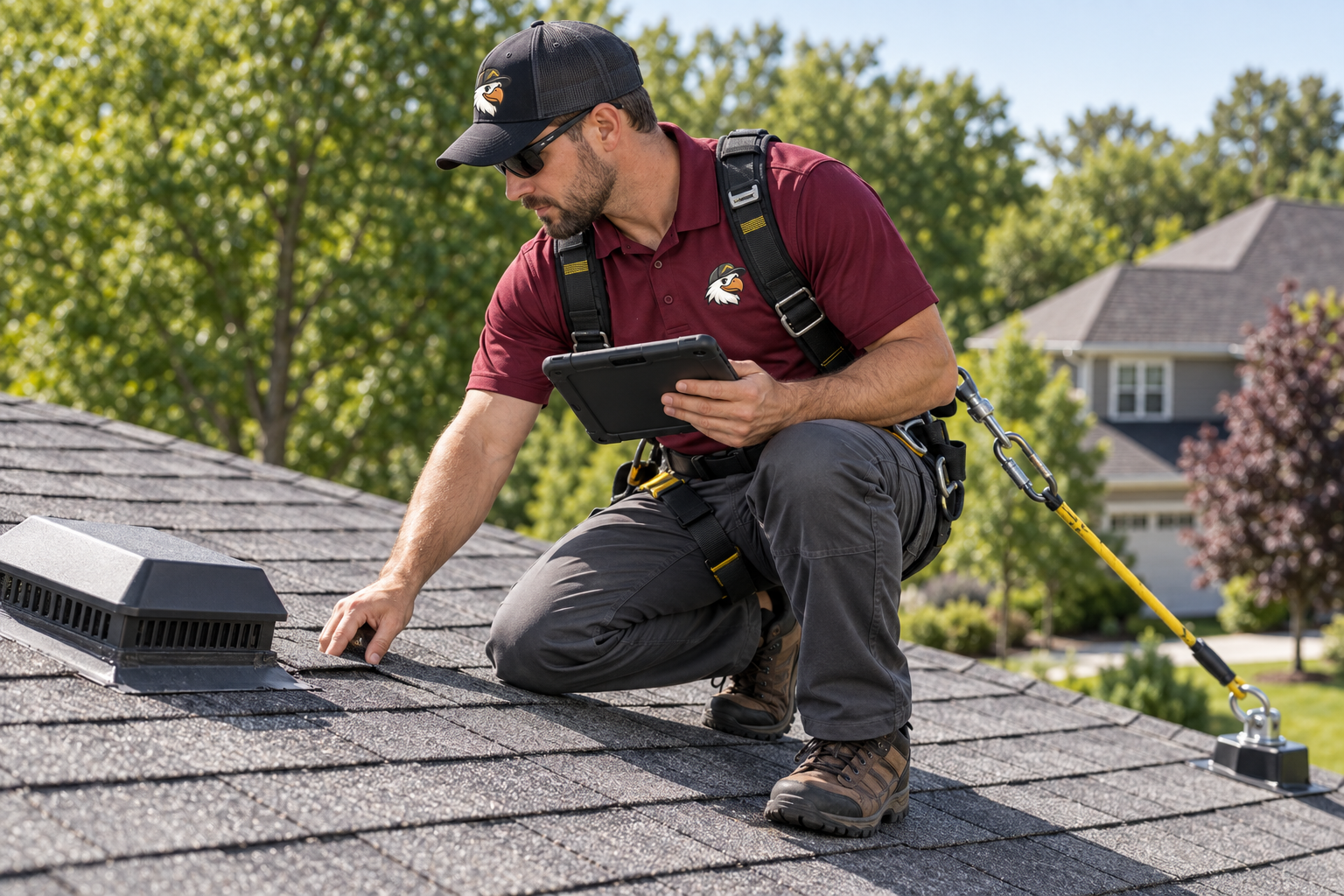
Look beyond the roof’s age.
Age provides context. The condition of the materials, the location of the damage, and the history of repairs also matter. Share any records you have, then ask which observations support the proposed work.
The location
One roof connection and several worn areas can call for different scopes.
The history
A repeated problem deserves an explanation of its cause and earlier repairs.
The limits
Ask what each option leaves in place and which areas the inspection could not assess.
Leave the conversation with a clear comparison.
Ask for the scope of each practical option. Review materials, exclusions, and warranty terms before you approve the project.
If the recommendation is unclear, ask which finding makes that option suitable for your roof.
“What will this option fix, and what will it leave in place?”
Start with a roof inspection →What affects the cost of a roof?
Use the estimate comparison to review the proposed work.
Open guide →